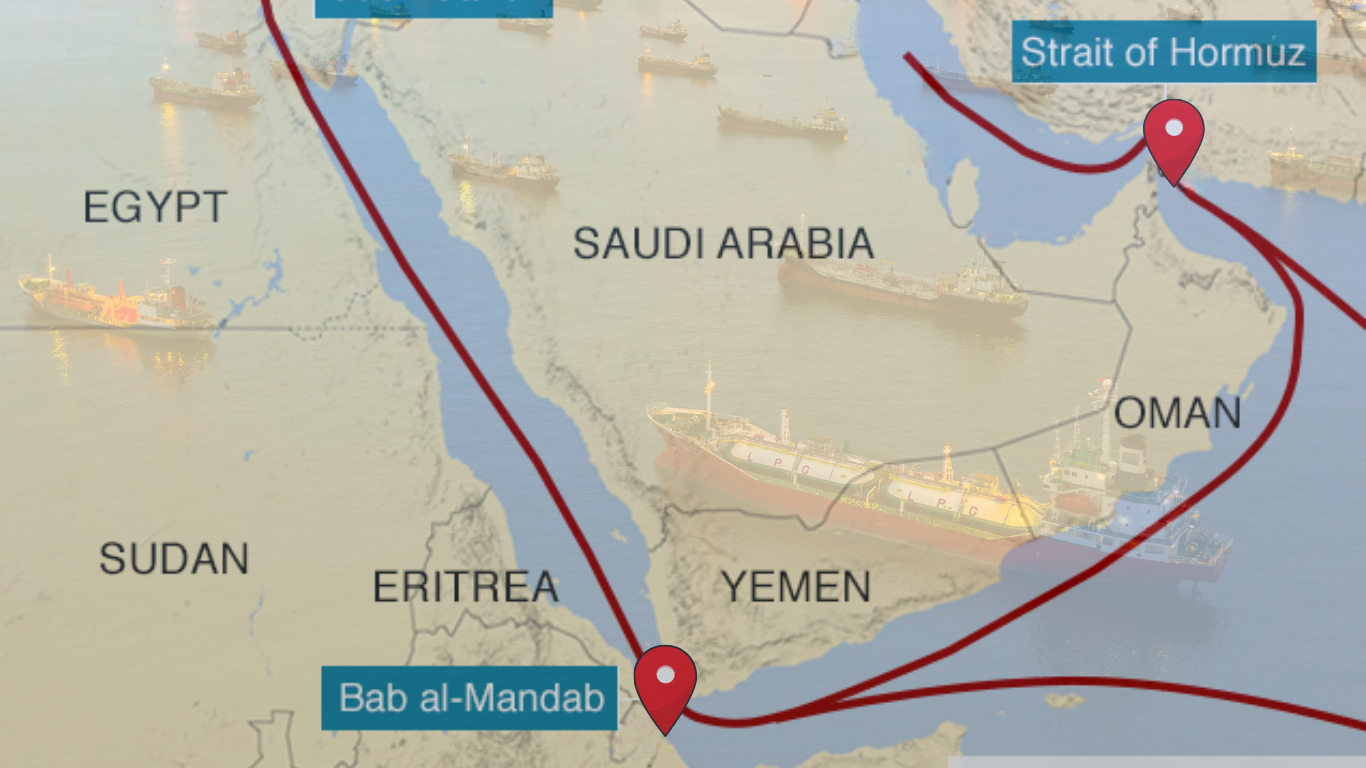
If both the Strait of Hormuz and the Bab el-Mandeb Strait were to close simultaneously, the impact would go far beyond a regional disruption—it would effectively sever two of the world’s most critical trade arteries. The consequences would ripple through global logistics, energy markets, industrial production, and economic stability.
1. Collapse of a Core Global Trade Corridor
The Bab el-Mandeb Strait is the southern gateway to the Suez Canal, a vital link between Asia and Europe. If this passage is blocked, maritime traffic between these regions is forced to reroute.
At the same time, the Strait of Hormuz controls access to the Persian Gulf, the world’s most important energy-exporting region.
Combined effect:
- Severe disruption of Asia–Europe trade flows
- Significant delays in container shipping
- Breakdown of “just-in-time” supply chains
2. Global Energy Shock
The Strait of Hormuz alone handles roughly 20% of global oil shipments and a major share of LNG exports.
Bab el-Mandeb complements this by enabling energy flows toward Europe via the Red Sea.
If both are closed:
- Oil prices could surge dramatically in a short period
- LNG supply chains would tighten, especially affecting Europe
- Energy-importing countries would face immediate cost pressures
3. Maritime Logistics Disruption
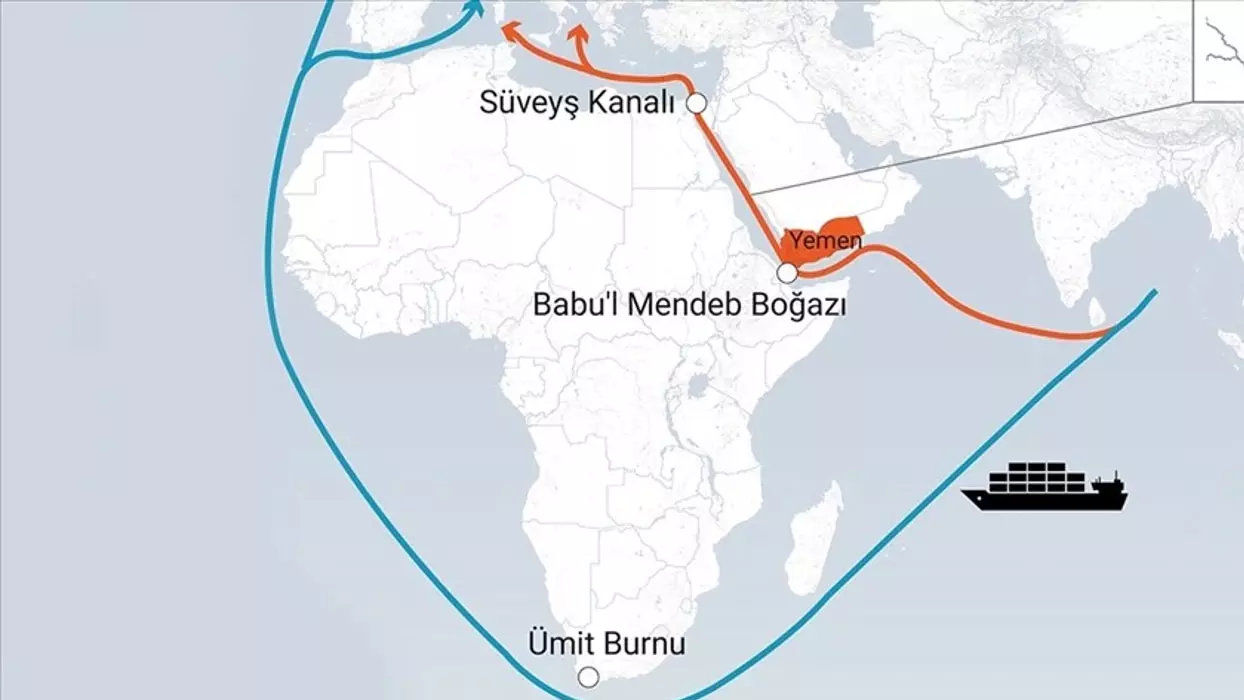
Shipping routes would be forced to bypass the Suez Canal and instead go around the Cape of Good Hope.
Operational consequences:
- Transit times increase by 10–20 days
- Fuel consumption and costs rise significantly
- Global shipping capacity tightens
This would likely push freight rates well beyond previous crisis levels.
4. Industrial Supply Chain Breakdown
Manufacturing systems—especially those dependent on Asian inputs—would be severely affected.
Key impacts:
- Delays in raw material deliveries
- Production slowdowns or shutdowns
- Disruptions in the automotive, electronics, and textile sectors
5. Inflationary Pressure Worldwide
Higher transportation and energy costs would cascade across all sectors.
Expected outcomes:
- Rising consumer prices globally
- Increased cost of food and essential goods
- Broad-based inflationary pressure across economies
6. Strategic Impact on Türkiye
For Türkiye, the situation presents both risks and opportunities.
Risks:
- Increased energy import costs
- Export delays and reduced competitiveness
- Supply chain instability
Opportunities:
- Strengthening of overland trade routes (Middle Corridor)
- Increased importance as a transit and logistics hub
- Higher demand for warehousing and buffer stock solutions
7. Geopolitical and Security Risks
The closure of these chokepoints would likely be linked to heightened regional conflict.
Implications:
- Increased military activity in the Red Sea and Gulf region
- Higher maritime insurance premiums (war risk)
- Elevated risks for global shipping operators
8. Structural Transformation in Logistics
Such a disruption would accelerate long-term shifts already underway in global trade.
Emerging trends:
- Diversification of supply chains
- Shift from “just-in-time” to “just-in-case” inventory strategies
- Growth of nearshoring and regional production
- Expansion of multimodal logistics solutions
Final Assessment
A simultaneous closure of the Strait of Hormuz and the Bab el-Mandeb Strait would not merely slow global trade—it would trigger a systemic shock.
Energy markets would destabilise, logistics networks would be forced to reconfigure, and the global economy would enter a period of intense volatility.
In such a scenario, resilience, flexibility, and strategic positioning would become the defining advantages for countries and logistics providers alike.
Gürkan KAVRAZLI
Logistics Expert & Entegrator
Educator I Speaker I Author
Sources
U.S. Energy Information Administration. (2023). World Oil Transit Chokepoints.
https://www.eia.gov/international/analysis/special-topics/World_Oil_Transit_Chokepoints
International Energy Agency. (2023). Oil Market Report.
https://www.iea.org/reports/oil-market-report
United Nations Conference on Trade and Development. (2023). Review of Maritime Transport.
https://unctad.org/publication/review-maritime-transport-2023
World Bank. (2023). Global Economic Prospects.
https://www.worldbank.org/en/publication/global-economic-prospects
Suez Canal Authority. (2023). Annual Report.
https://www.suezcanal.gov.eg
Lloyd’s List Intelligence. (2024). Red Sea Shipping Disruptions Analysis.
BP. (2023). Statistical Review of World Energy.
https://www.bp.com/en/global/corporate/energy-economics/statistical-review-of-world-energy.html
International Monetary Fund. (2023). World Economic Outlook.
https://www.imf.org
McKinsey & Company. (2022). Risk, resilience, and rebalancing in global value chains.
https://www.mckinsey.com
Drewry Shipping Consultants. (2024). Container Market Outlook.
Chatham House. (2023). Global Trade Chokepoints and Security Risks.
Center for Strategic and International Studies. (2024). Critical Maritime Chokepoints.
About the Author
