Introduction
In recent years, the global economy has experienced significant disruptions. The pandemic, energy crises, geopolitical tensions, and supply chain disruptions have forced many regions to reconsider how global trade and production systems operate.
For the European Union, one key realisation has emerged: relying heavily on distant production centres creates serious vulnerabilities.
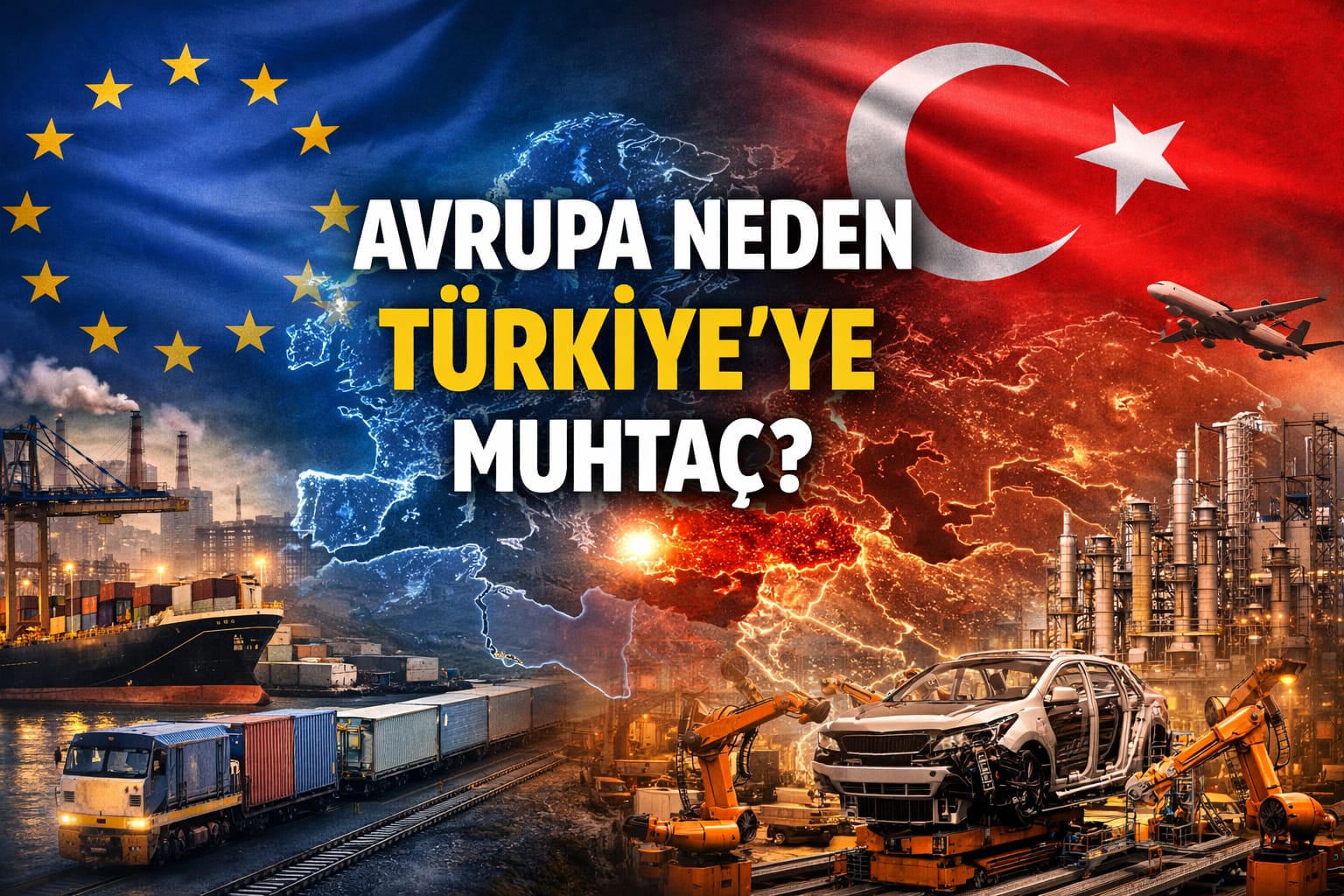
As a result, Europe has begun reshaping its industrial strategy. In this new strategy, one country stands out as particularly important: Türkiye.
But why does Europe need Türkiye?
1. Strategic Geographic Location
Türkiye occupies a unique geographical position between Europe and Asia. This location is not only significant on a map but also highly strategic for trade and logistics.
For many European industrial centres, Türkiye offers:
- short transportation distances
- strong port infrastructure
- direct access to the Middle East, the Caucasus, and Central Asia.
This makes Türkiye not only a manufacturing base but also a strategic logistics hub for global trade.
2. Strong Industrial Infrastructure
Over the past four decades, Türkiye has developed a robust industrial base. Strong integration with European industries has emerged particularly in sectors such as:
- automotive manufacturing
- home appliances
- machinery production
- textiles and apparel
- steel and metal industries.
Many components used in European cars today are manufactured in Türkiye. Similarly, in sectors such as home appliances and machinery, Türkiye has become one of Europe’s key production partners.
This integration has made Türkiye a natural extension of Europe’s supply chain.
3. Supply Chain Security
The pandemic exposed major weaknesses in global supply chains. Factory shutdowns in Asia, container shortages, and port congestion caused serious disruptions in European industries.
These challenges highlighted an important lesson:
Long and fragile supply chains create strategic risks.
As a result, Europe has begun promoting a strategy known as “nearshoring,” which involves relocating production closer to home.
Türkiye stands out as one of the most suitable partners for this strategy due to:
- geographic proximity to Europe
- strong industrial capacity
- well-developed logistics networks.
4. Cost Competitiveness
Production costs in Europe have risen significantly in recent years, driven by factors such as:
- high energy prices
- labor costs
- strict environmental regulations.
Türkiye, on the other hand, offers relatively competitive production costs while maintaining high manufacturing capabilities.
This makes Türkiye an attractive and cost-efficient production alternative for European companies.
5. Economic Integration with Europe
Türkiye and the European Union have maintained strong economic ties through the Customs Union, which has significantly integrated their trade systems.
Today, nearly half of Türkiye’s exports go to European Union countries. At the same time, European companies have made substantial investments in Türkiye.
This deep economic integration positions Türkiye as a strategic economic partner for Europe.
Conclusion
Europe’s growing reliance on Türkiye is not based on a single factor. Geographic proximity, industrial capability, logistics advantages, cost competitiveness, and strong economic integration all contribute to Türkiye’s importance.
As global trade gradually shifts toward more regional supply chains, Türkiye’s strategic role is likely to grow even further.
For Europe, Türkiye is not merely a neighbouring country—it is increasingly a critical partner in manufacturing, logistics, and supply chain resilience.
Gürkan KAVRAZLI
Logistics Expert & Entegrator
Consultant I Educator I Author
Sources used in this article:
DÜNYA. (2026, Mart 12). Türkiye stratejik sektörlerde yeni oluşuma dahil oldu: 4 sektör Made in EU’da. DÜNYA. https://www.dunya.com/sektorler/turkiye-stratejik-sektorlerde-yeni-olusuma-dahil-oldu-4-sektor-made-in-euda-haberi-817261?utm_source=chatgpt.com
Türkiye Gazetesi. (2026, Mart 12). AB ile ticarette yeni dönem: Made in EU’ya Türkiye de dahil edildi. Türkiye Gazetesi. https://www.turkiyegazetesi.com.tr/ekonomi/ab-ile-ticarette-yeni-donem-made-in-euya-turkiye-de-dahil-edildi-1774894?utm_source=chatgpt.com
OECD. (2022). Türkiye: Sanayi ve Ekonomik Performans Raporu. OECD Yayınları. https://www.oecd.org/turkey/
TÜİK. (2025). Sanayi ve üretim istatistikleri 2024. Türkiye İstatistik Kurumu. https://data.tuik.gov.tr/Kategori/GetKategori?p=istatistikler-101&dil=1
European Commission. (2023). EU Industrial Strategy and Nearshoring Initiatives. Brussels: European Commission. https://ec.europa.eu/info/business-economy-euro/industrial-strategy_en
World Bank. (2022). Turkey: Manufacturing and Trade Integration Report. Washington, DC: World Bank. https://www.worldbank.org/en/country/turkey/publication/turkey-manufacturing-trade-integration
IMF. (2023). Turkey: Economic Outlook and Industrial Capacity. International Monetary Fund. https://www.imf.org/en/Countries/TUR
UNCTAD. (2022). Global Supply Chains and Nearshoring Trends. United Nations Conference on Trade and Development. https://unctad.org/topic/trade-analysis/nearshoring
About the Author
